
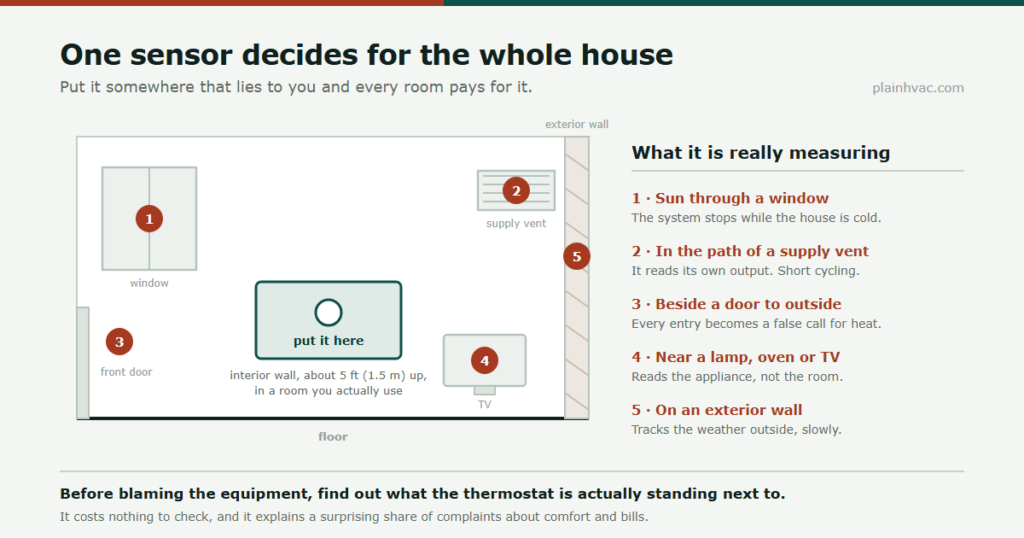
Thermostat Placement: What Your Sensor Is Really Measuring
The whole house takes orders from one sensor on one wall. Five spots that make a healthy system behave like a broken one.
The whole house takes orders from one sensor on one wall. Five spots that make a healthy system behave like a broken one.
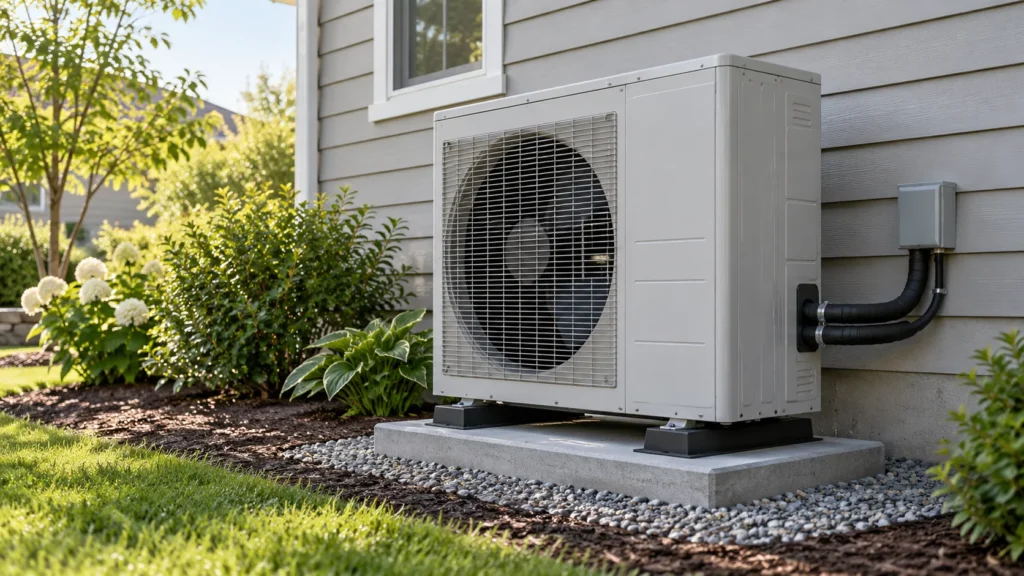
Four checks to document repeated heat-pump starts and stops, distinguish defrost, and prepare a useful symptom log for your technician.
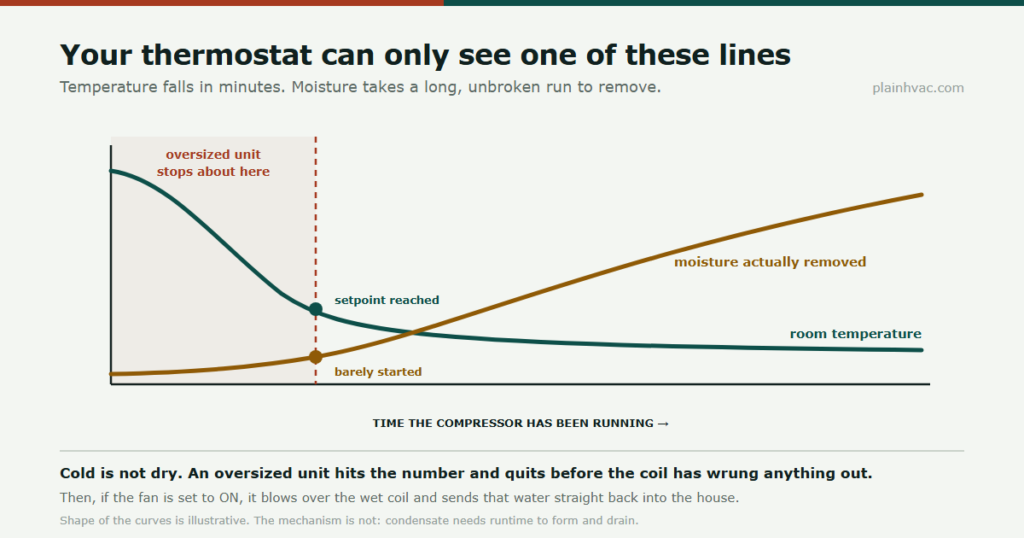
An oversized unit hits the setpoint before the coil has removed any moisture. Why that happens, and the free fix to try first.
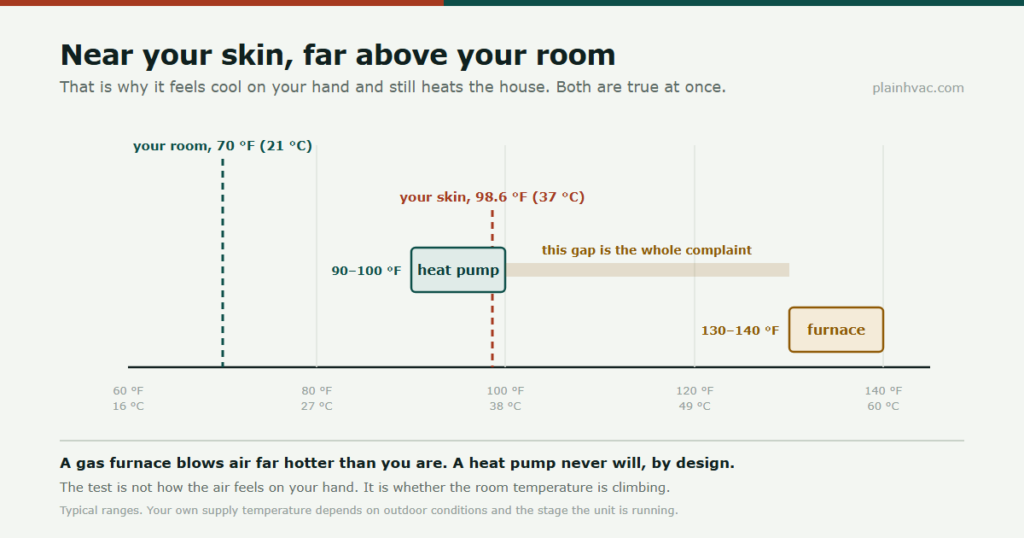
Heat pump supply air lands near your skin temperature, so it feels cool while it heats the house. How to tell that apart from a real fault.
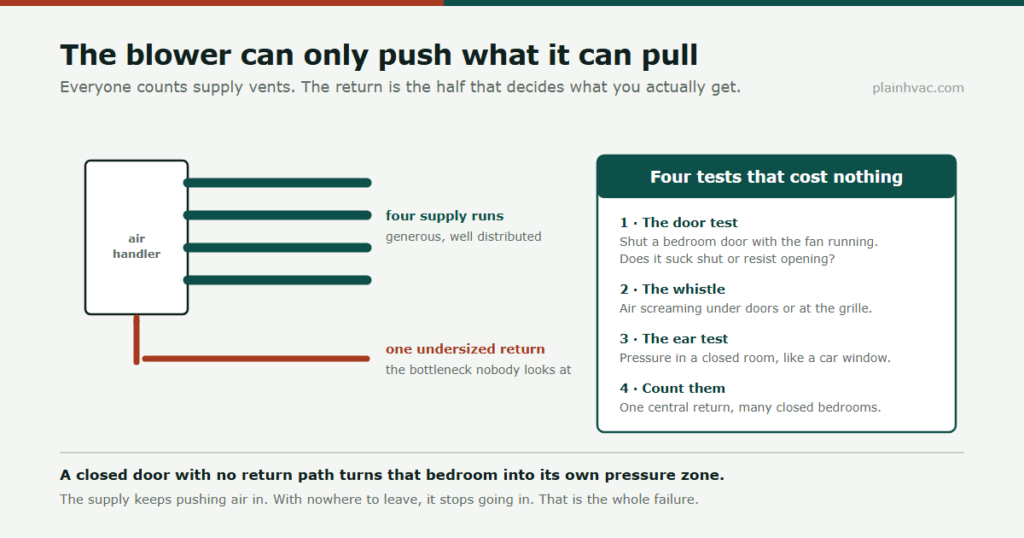
If the whole system feels weak rather than one room, the return path is the first suspect. Four tests that need no tools.
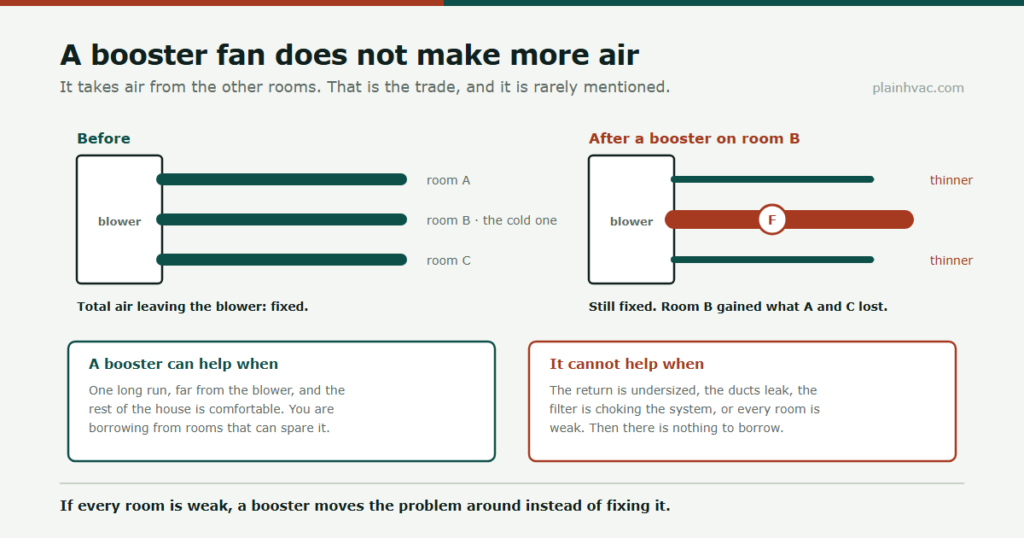
A booster fan helps one room by taking air from the others. Whether that trade works depends on what you rule out first.
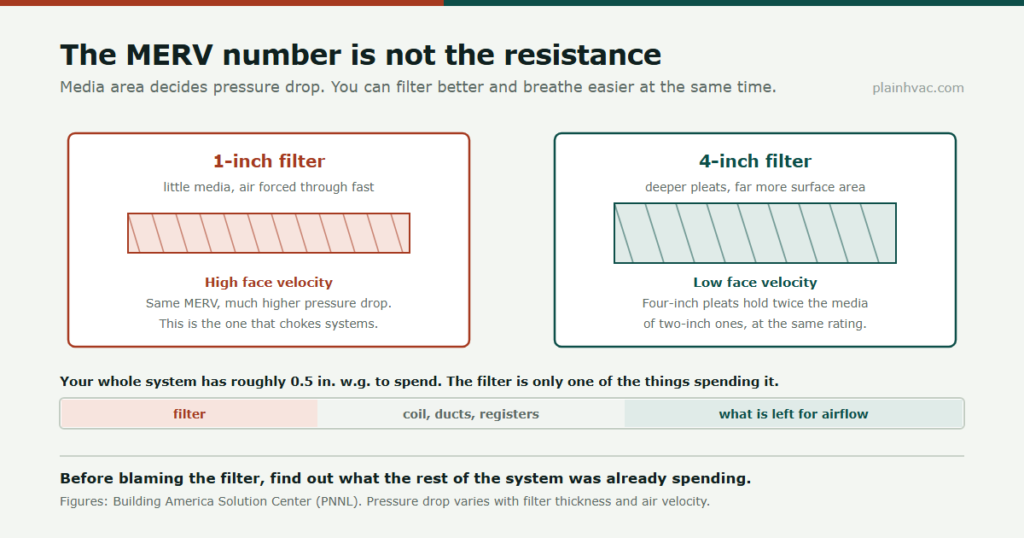
A MERV 13 filter does not restrict airflow because of its rating. Thickness and the static pressure your ducts were already running decide it.
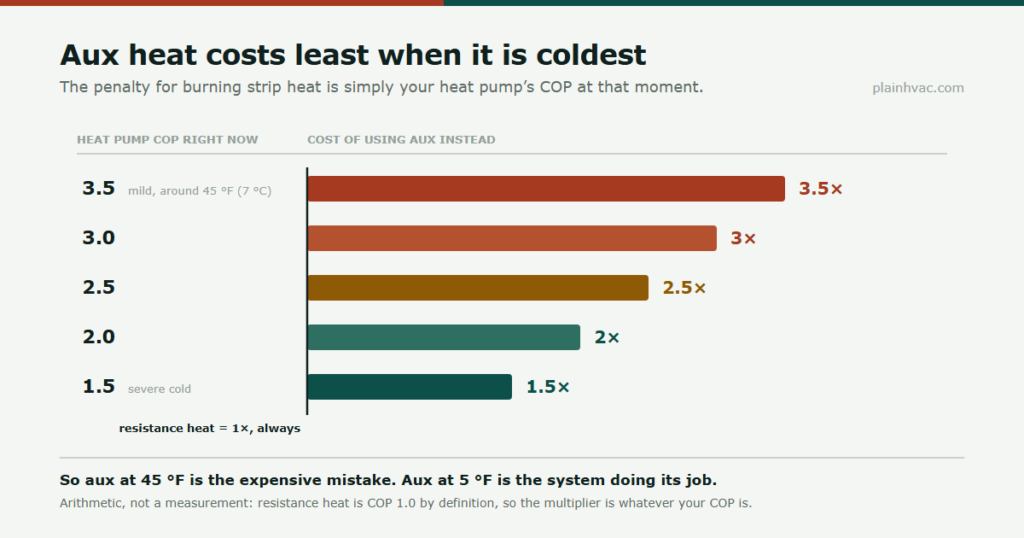
Auxiliary heat running is not automatically a fault. There are three causes, two of them free to fix, and the order you check them in decides whether you pay for a diagnostic.
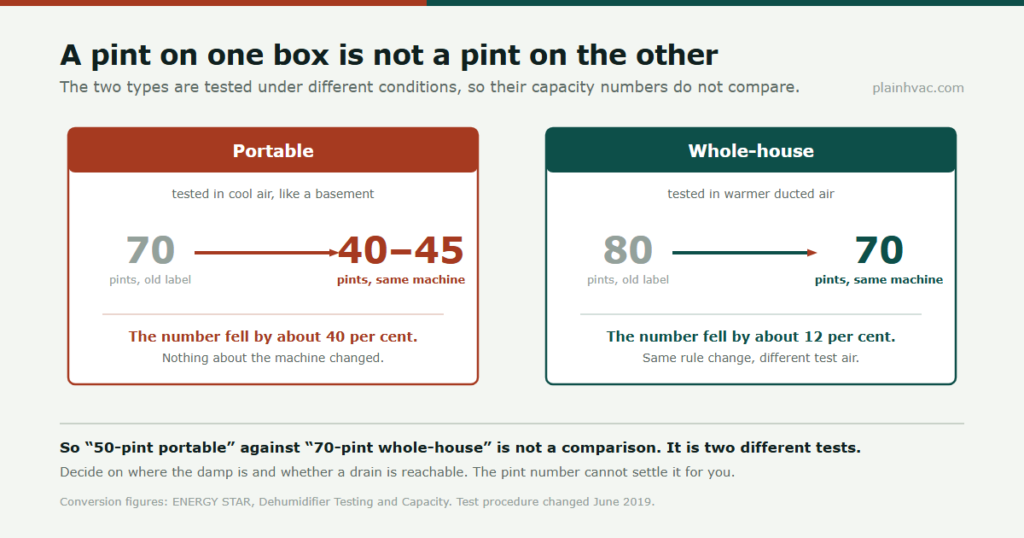
For most basements a portable is enough. The pint ratings on the two types are measured under different tests, so they cannot be compared. What actually decides it.
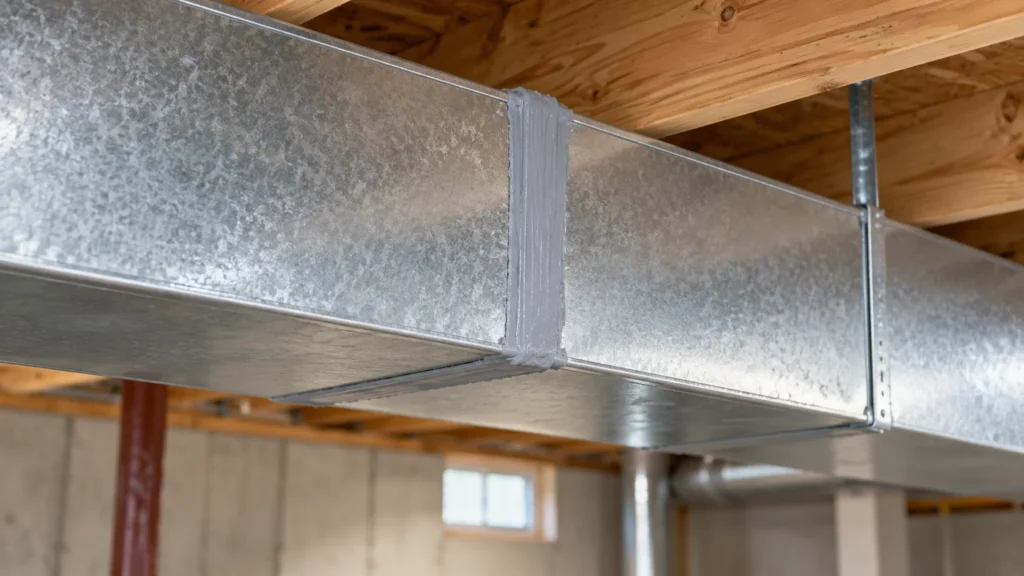
Assess accessible duct leaks, record what you find, and compare repair quotes with a practical survey and five questions for your contractor.