
Plain HVAC · Practical homeowner guides
Understand your system.
Make a better next decision.
Clear explanations of heat pumps, mini-splits, airflow and running costs. Start with your question, record what you can observe, and know what to ask a qualified technician.
Find your starting pointHow our guides are researched →Start with a useful task
What are you trying to work out?
These guides include a worksheet, a worked calculation or a checklist you can use.
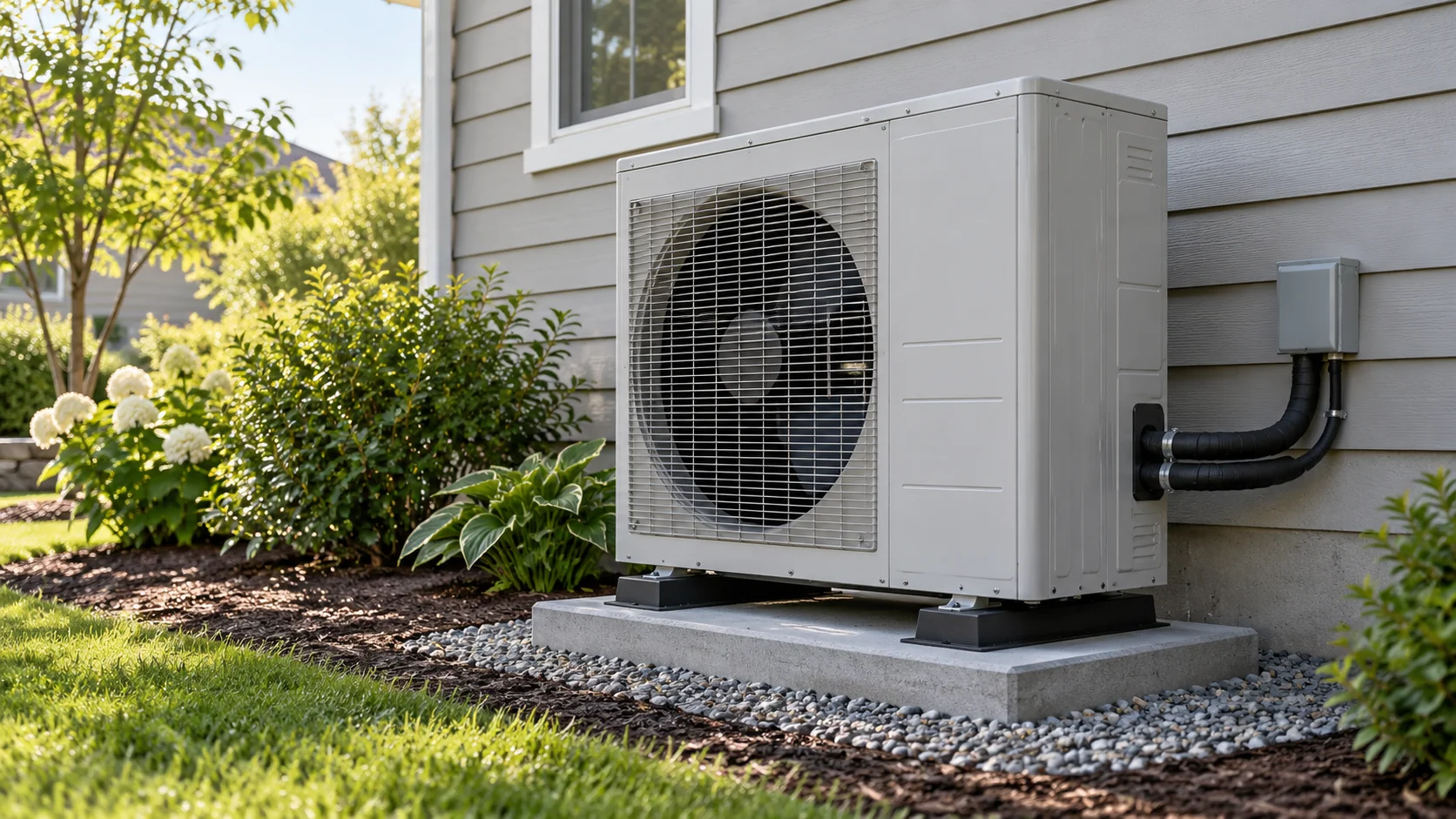
01 / System behavior
Why does it keep stopping?
Record repeated starts and stops, distinguish possible defrost behavior, and prepare a symptom log for a service call.
Use the four-check guide →
02 / Running costs
What does standby cost?
Turn measured kWh or average watts into a cost estimate, with clear assumptions and a reusable measurement log.
Work through the calculation →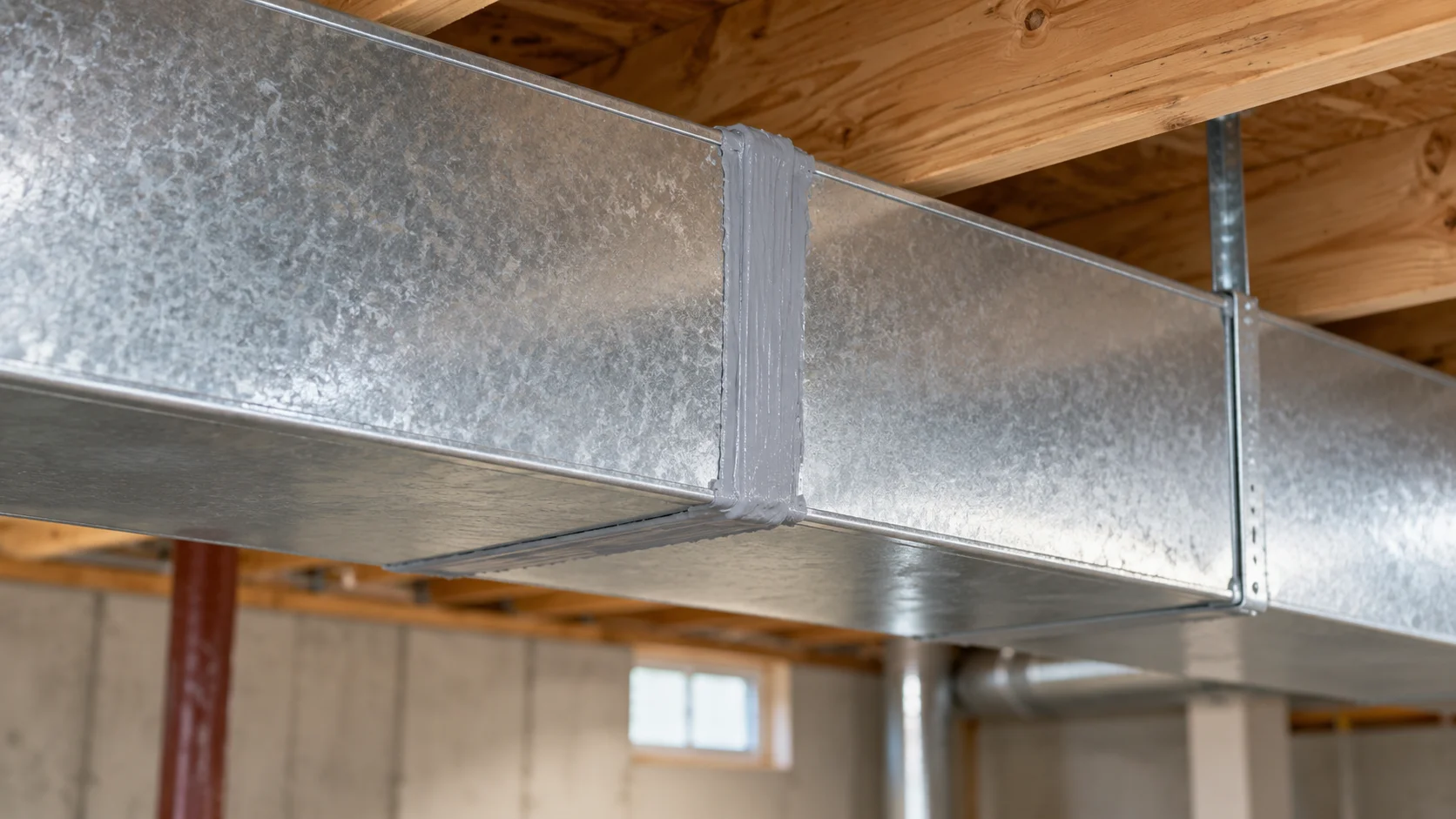
03 / Ducts and comfort
Which leaks can I address?
Map visible duct problems, understand the limits of DIY work, and compare the scope of repair quotes.
Start the duct survey →The three images above are AI-generated illustrations, not photographs of tested products or completed installations.
Explore by topic
Equipment choices, location, line sets and installation questions.
Heating behavior, auxiliary heat and symptoms worth recording.
Thermostats, return air, duct boosters and zoning.
Filters, humidity and dehumidification.
Understand the difference between building leaks and duct leaks.
Energy calculations and the assumptions behind them.
Organize observations before arranging service.
Read with context
Sources you can check. Limits you can see.
Plain HVAC is written by Riduan El Hajjouji from Belgium. Guides distinguish researched information from measurements and model-specific instructions. Check the region, equipment model and evidence before applying a figure to your own home.
A guide can help you prepare better questions. It cannot inspect your building, diagnose an electrical fault or replace your equipment manual.
About the authorEditorial standardsSafety and scopeSuggest a correction
Four things decide what your system does
Most of the questions on this site — why a room never warms up, why the air feels clammy, why the bill doubled in January, why a new unit short cycles — come back to four variables. They are worth understanding in order, because fixing the wrong one is how people spend four figures and change nothing.
1. Capacity against load
Load is how much heat your building loses in winter and gains in summer, at a given outdoor temperature. Capacity is how much the equipment can move. The two are matched at a design condition, not at every condition, which is why a system that is correct on the coldest night of the year is oversized on a mild one.
Oversizing is the more common fault, and it is not harmless. A unit with too much capacity satisfies the thermostat quickly and shuts off, which means short run times, less moisture removed from the air in summer, bigger temperature swings, and more wear on the compressor. That is the mechanism behind two separate complaints that look unrelated: a house that is cold and still humid, and a system that keeps starting and stopping.
2. Airflow
Equipment is rated at an airflow. Restrict it and the rated performance stops applying — in heating the coil runs hotter, in cooling it runs colder and can ice up, and in both cases capacity drops while the compressor keeps drawing power. Airflow is restricted by filters, by undersized or crushed return ducts, by closed registers, and by long or badly shaped duct runs.
This is the variable homeowners most often get wrong in the hopeful direction. Adding a fan to a weak branch, or closing registers elsewhere to push air where you want it, does not create airflow — it moves a fixed amount around, and closing registers raises static pressure on a system that may already be struggling.
3. Outdoor temperature, if you have a heat pump
A heat pump is not a fixed-output appliance. Its capacity falls as the outdoor temperature falls, exactly when the building needs more. The temperature at which available capacity and building load cross is the balance point, and below it something else has to make up the difference: electric resistance strips, a gas furnace in a dual-fuel setup, or simply a slow drift downward indoors.
Two behaviours that worry people follow from this and are normal. Supply air from a heat pump is cooler than from a furnace — warm, not hot — so it can feel like a draught. And the outdoor unit periodically reverses to melt frost off its coil, during which it blows cool air indoors and steams outside. Neither is a fault on its own.
4. Controls
The thermostat does not measure the temperature of your house. It measures the temperature of the small volume of air touching it, on whatever wall it was screwed to, often a long time ago by someone whose priority was the convenience of the wiring. Put it in sun, above a lamp, on an exterior wall, or in the draught of a return grille, and it will report a temperature the rest of the house does not share — and the system will faithfully correct a problem that does not exist.
The same applies to settings. A dual-fuel switchover temperature left at the installer default, or auxiliary heat allowed to come on at the slightest setback recovery, will cost real money without ever showing up as a fault.
What you can establish yourself, and what you cannot
A homeowner with no instruments can still produce information a technician would otherwise have to spend billable time collecting. That is the honest ceiling of what this site is for, and it is higher than it sounds.
Things you can establish on your own, with nothing but attention and a notebook:
- How long the system runs and how long it rests, timed over an hour, at a known outdoor temperature.
- Whether a symptom tracks the weather, the time of day, or the thermostat setting — which separates a control problem from a capacity problem.
- Indoor relative humidity alongside temperature. Cheap hygrometers are imprecise in absolute terms but reliable enough for comparing one room with another, or today with yesterday.
- Temperature differences between rooms, measured at the same height, away from sun and vents.
- Which registers move air and which do not, by feel, and whether that changes when interior doors are shut.
- The equipment model numbers from the data plates, and the installation date.
Things that need a technician with instruments, and that no article can substitute for: refrigerant charge, superheat and subcooling, static pressure across the air handler, combustion analysis on anything that burns fuel, electrical fault diagnosis, and any judgement that depends on seeing your actual ductwork.
The division matters because the second list is where money and safety live. A guide that pretends otherwise is selling confidence, not information.
Why the figures here carry labels
Costs and performance numbers on this site are labelled as measured, quoted or sourced, with a date and a region. That is not a formality. A running-cost figure is the product of a tariff, a climate, a building and a piece of equipment, and three of those four change when you cross a border.
The site writes for the United States, Canada, the United Kingdom and Australia, and the same question has four different answers in them — different electricity prices, different gas availability, different efficiency ratings on the box, different rules about who may legally open a refrigerant circuit. Where that changes the answer, the article says so instead of quoting one market as if it were the world.
Where a limit comes from a manufacturer — a maximum line set length, a minimum airflow, a lockout temperature — the article cites the manual rather than repeating a number that has been copied between blogs until nobody knows where it came from. Where manufacturers disagree, which they often do, the article says that too.
Every guide on the site
Twenty-two guides, grouped by what they are about. Each one states its scope at the top and its sources at the bottom.
Mini-Splits
- 120V Mini Split: What It Solves and What It Does Not
- Mini-Split Line Set Length: The Four Limits and Why They Exist
- DIY Mini-Split Installation: What You Can and Cannot Legally Do
- Are Budget Mini-Split Brands Worth It? What You Actually Give Up
- Where to Mount a Mini-Split Head: The Constraints That Decide It
Heat Pumps
- Heat Pump Short Cycling: The Four Free Checks to Make First
- Heat Pump Blowing Cool Air: When That Is Normal and When It Is Not
- Heat Pump Auxiliary Heat: Why It Runs So Much, and When to Worry
Central HVAC
- Thermostat Placement: What Your Sensor Is Really Measuring
- Not Enough Return Air: Four Tests You Can Do Today
- Do Duct Booster Fans Work? What They Move and What They Cannot
- Extended HVAC Warranty: What You Are Actually Being Sold
- Zoning a Single-Stage System: Why the Bypass Damper Is Not a Fix
Indoor Air
- House Humid With the AC Running? Cold Is Not the Same as Dry
- Will a MERV 13 Filter Choke Your System? It Depends on Two Things
- Whole House Dehumidifier vs Portable: Which One Your Basement Needs
Running Costs
- Dual Fuel Switchover Temperature: The Default Is Probably Wrong
- Mini-Split Standby Power: Why Nobody Agrees What It Costs
Insulation
- Duct Sealing: Which Ducts You Can Seal Yourself, and Which Ones You Cannot
- How to Find Air Leaks Without a Blower Door Test